
We had an eclectic mix at the meeting on June 19th.
The first half of the meeting was Bob McKewen who revealed ‘The Science of Golf.’
He explained that golf is a game built on elegant physics. Every shot begins with energy transfer: the club accelerates, storing kinetic energy that is released into the ball at impact.
The sweet spot maximises this transfer, giving higher ball speed with less vibration. Launch angle and spin then determine the ball’s flight. Backspin creates lift, helping the ball rise and stay stable in the air.
Dimples reduce drag by creating a thin, turbulent layer that lets the ball travel farther. On the green, friction, slope, and grass grain control how a putt breaks and slows. Even small changes in force or angle produce big differences in outcome, making golf a precise blend of biomechanics and physics.
Bob concluded by describing that many technical advances have filtered down from the professional game to grass roots level.
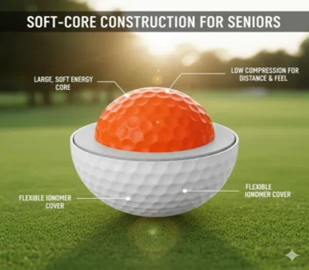
Cross section of an average quality golf ball.
After the break John Tedstone recounted the lives and scientific interests of:
Lady Mary Wortley Montagu born in 1689, at Holme Pierrepont Hall.
She was an early adopter of inoculation against smallpox and helped bring the practice to England, influencing others to adopt it too.
and Joseph Bramma who was born near Barnsley in 1749.
At 23, he walked to London to seek his fortune. Now called Joseph Bramah, he became a prolific inventor best known for his flushing water closet, ‘unpickable’ lock and hydraulic press.
To conclude David Vincent recounted some interesting and humorous aspects of Gypsum mining in Nottinghamshire and we had 3-minute invention talks from David Naylor with the safety pin and Sue Naylor with the electric kettle complete with her family heirloom of a shiny copper example.
Our next meeting is Friday July 17th at JGC at 10.00am.
David Rose