Short Walks

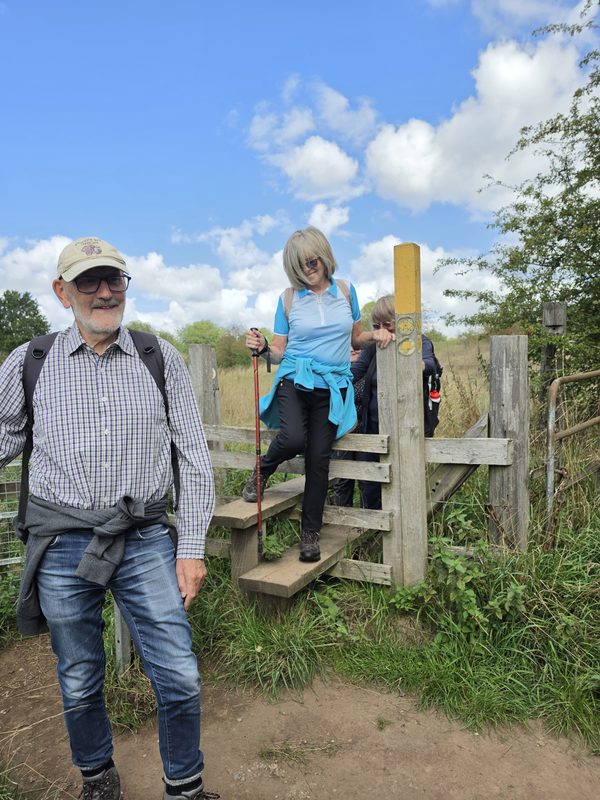
On June 18th our walk started from the car park at Burntstump. (Approx. 4.5 miles)

From the car park we made a full circuit of the cricket pitch. From the far side we followed the path out to Rigg Lane, then continued downhill to join the broad track of the old railway line. This straight, level section led to Sansom Woods following the main path through the trees.

To return we picked up the Robin Hood Way as it wound back through mixed woodland, returning past the Rugby Ground before neatly arriving back at the car park.

July 16th Walk

This will be an urban walk taking the tram into Nottingham to walk to the new made in Hucknall ‘Briton Bridge’ over the River Trent.

Full details will be sent out w/c 9th July

David Rose

Science

We had an eclectic mix at the meeting on June 19th.

The first half of the meeting was Bob McKewen who revealed ‘The Science of Golf.’

He explained that golf is a game built on elegant physics. Every shot begins with energy transfer: the club accelerates, storing kinetic energy that is released into the ball at impact.

The sweet spot maximises this transfer, giving higher ball speed with less vibration. Launch angle and spin then determine the ball’s flight. Backspin creates lift, helping the ball rise and stay stable in the air.

Dimples reduce drag by creating a thin, turbulent layer that lets the ball travel farther. On the green, friction, slope, and grass grain control how a putt breaks and slows. Even small changes in force or angle produce big differences in outcome, making golf a precise blend of biomechanics and physics.

Bob concluded by describing that many technical advances have filtered down from the professional game to grass roots level.

                               Cross section of an average quality golf ball.

After the break John Tedstone recounted the lives and scientific interests of:

Lady Mary Wortley Montagu born in 1689, at Holme Pierrepont Hall.

She was an early adopter of inoculation against smallpox and helped bring the practice to England, influencing others to adopt it too.

and Joseph Bramma who was born near Barnsley in 1749.

At 23, he walked to London to seek his fortune. Now called Joseph Bramah, he became a prolific inventor best known for his flushing water closet, ‘unpickable’ lock and hydraulic press.

To conclude David Vincent recounted some interesting and humorous aspects of Gypsum mining in Nottinghamshire and we had 3-minute invention talks from David Naylor with the safety pin and Sue Naylor with the electric kettle complete with her family heirloom of a shiny copper example.

Our next meeting is Friday July 17th at JGC at 10.00am.

David Rose

Not So Grumpy Old Men

Visit Mansfield Fire Brigade Museum

Nineteen members of the NSGOM group recently attached blues and twos to their cars and went up to Mansfield to learn about the history of the Nottinghamshire Fire Service. Located at the front of the former Notts Fire Service training school in Mansfield, the site also houses the present Mansfield Fire Station.  The Museum is run by a Trust and relies heavily on volunteers.

The aim of the Trust is to collect and preserve fire service items from as far back as the Great Fire of London but also showing many local items, for example from Thoresby and Welbeck Estates.

Assembling together inside the museum we were given a very informative history of the fire service, which included being shown, a leather bucket and “squirter” used in the 17th century. We then went on a comprehensive tour of the museum seeing fire fighting equipment, uniforms, helmets and various fire engines themselves,

We are lucky to have one of the few such museums in the country on the doorstep and we enjoyed a couple of hours learning so much about the history of the fire service. Huge thanks go to group member Dave Robbins for planning the day and also to volunteers, Richard and Paul, who led the visit and were a fountain of knowledge.

The visit was completed with a meal and drink at the Rushley restaurant in Mansfield, before returning back to Hucknall.

Barrie Saunders

Garden Group

Last month members enjoyed a trip to the allotments at St Ann’s in Nottingham. It was a very interesting visit, full of history. There are 75 acres of allotments, which includes 32 miles of hedges that need trimming and cutting. Sounds like a lot of work! There is one allotment that has been kept as it was when they were set up, with a small building where the families used to spend weekends as they tended their rented plots. Apparently, some families even lived there completely when they were homeless. 

The site has some areas now where horticulture students can study and learn all about plants and their growing needs. There’s a classroom, greenhouse and beds to trial different plants and shrubs. Although it was forecast to be a very wet day the rain held off and we enjoyed a dry wander around the site.

The next meeting is a talk about Ramblers, Scramblers and Climbers at the JGC, all are welcome.

The August meeting is a trip to Queen’s Park in Loughborough followed by a visit to Gates Garden Centre.

Anne

Vegetarian Cookery

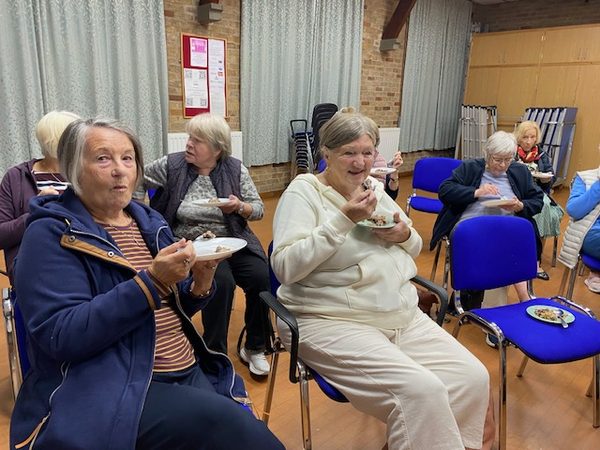
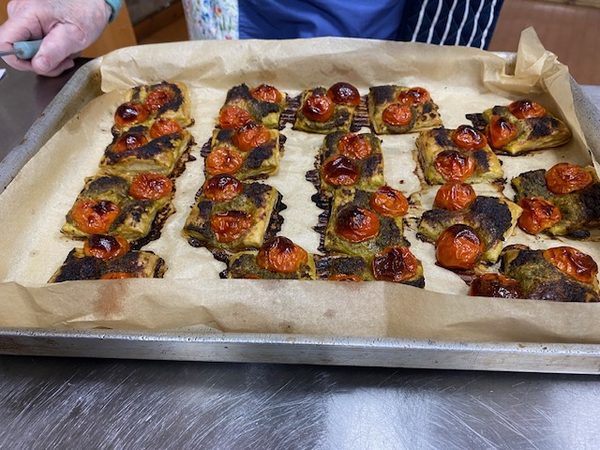
A smaller group than usual attended June’s meeting, probably due to the hot weather, but those who did attend enjoyed the usual three recipes, and as ever there were no leftovers!

Thank you to those who helped in the kitchen, organising the room and serving out the plates of food, we cannot do it without you!

There will be no meeting in July, but as August has 5 Mondays, we can fit one in on Monday 24th August.

This group is currently full, but if anyone else is interested please contact me with your name and I will put you on the waiting list.

Anne