Science

At our January meeting we were pleased to welcome two of the academic staff from Nottingham Trent University.

Dr Amy Twigger Holroyd who is an Associate Professor of Fashion and Sustainability in the School of Art & Design. She leads research projects at the intersection of fashion, making, design and sustainability. She also contributes to BA and MA teaching and supervises PhD students.

Dr Katherine Townsend a researcher, educator, practitioner and Professor in Fashion and Textile Practice in the Fashion, Textiles and Knitwear department in the School of Art and Design. She is a PhD supervisor who contributes to postgraduate and undergraduate teaching.

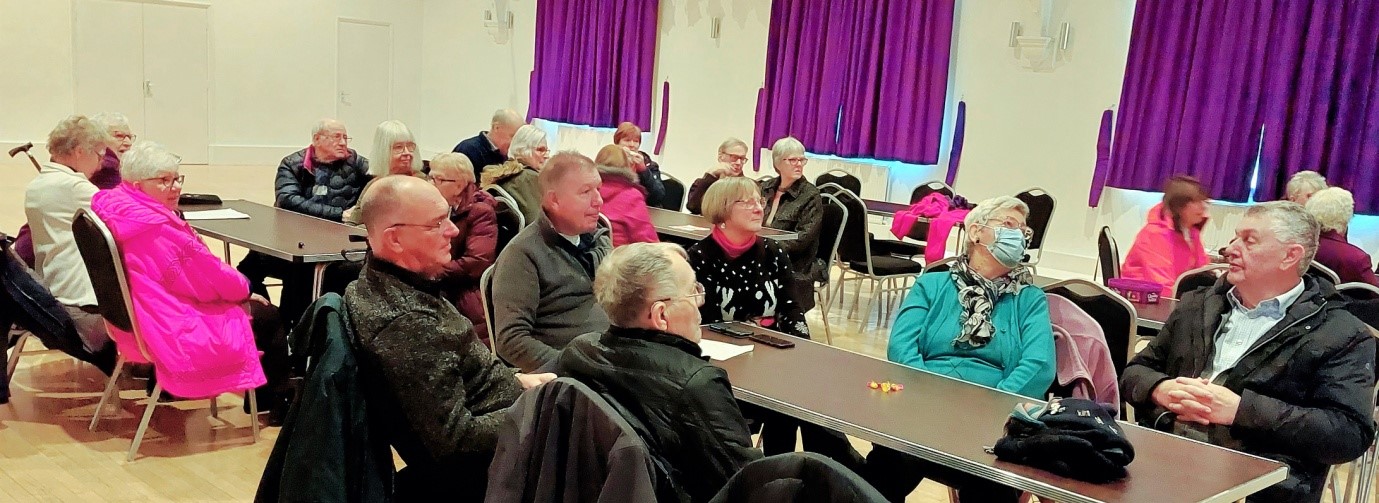
The theme of their presentations was sustainability in fashion and a focus on reusing and reshaping discarded clothing/material. They described some of the research and community projects around reuse and sustainability that they are currently involved in. It was a lively session with lots of interesting questions from the members.

It may be a cliché, but the mantra “buy less and buy better” is key when we consider that a staggering 100 billion garments are being produced globally every year. Before making a purchase, maybe we should ask ourselves three all-important questions:
‘What are you buying and why? What do you really need? Will you wear it at least 30 times?’

Thanks to Christine Vincent for arranging this link with the university.

Friday, 17th February Meeting
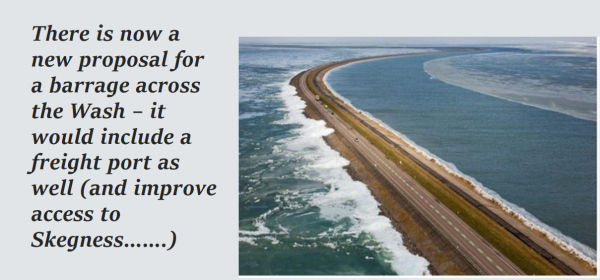
John Tedstone will follow up his presentation about the Severn Barrier with a current very ambitious proposal to erect a barrier to produce energy across the Wash.

In part 2, a change of topic when I will go full David Attenborough to consider animal extinction, re wilding and facts about some endangered species.

David Rose

Science

Our final meeting of 2022 was on the Friday 16th December.
Bob McEwen led a group colour blindness test.
Most people with colour vision deficiency have difficulty distinguishing between shades of red, yellow and green. This is known as “red-green” colour vision deficiency. It’s a common problem that affects around 1 in 12 men and 1 in 200 women. Almost in line with the national average 2 males in our group were shown to have this deficiency.

Bob explained how it is inherited through family genetics. Red-green colour blindness is a sex-linked trait and therefore encoded on the X chromosome. Because women have two X 🙁 XX) and can overcome the handicap of one, men have only one (XY) and are therefore more often affected.


Terry Hill then gave a brief update on the completion of NASA’s Artemis I mission — splashdown was in the Pacific Ocean last Sunday afternoon — this has set up the return of humanity to the Moon and is paving the way onwards to Mars.

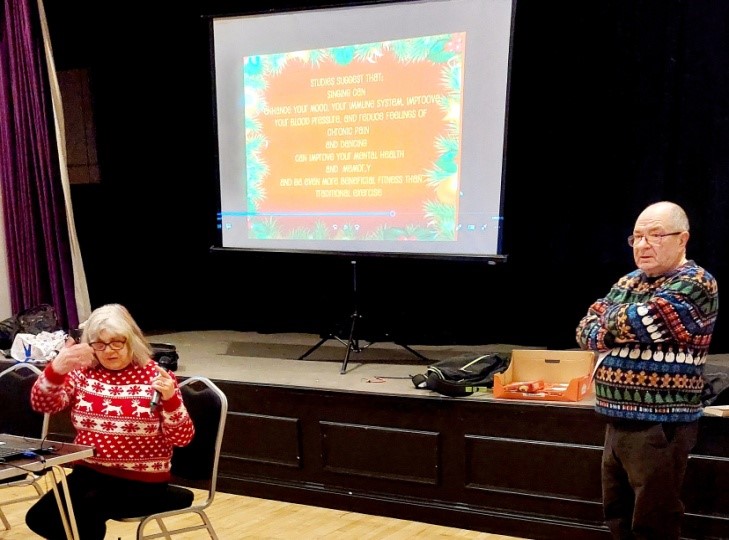
The 2nd half of the meeting was a fun science based Christmas themed quiz hosted by the question setters and quiz masters David and Christine Vincent.

The time spent on the preparation of the interactive quiz with its audio and visual effects was much appreciated by the quizzers and we extend our thanks to David and Christine.

Next Meeting: Friday January 20th, 2023 at 10am at the John Godber Centre

David Rose

Science

We had a very interesting session in November starting with a presentation from Terry Hill who told us about the Artemis I rocket which is off to the Moon. However, it will not land on the Moon and is currently in orbit nearby before returning to Earth after 26 days.

He then explained how this could be part of the plan to put humans on Mars. This led to speculation about how physical characteristics of humans living in reduced gravity might evolve in the future.

Bob McEwen followed with a very interesting look at how the eyes (and some other senses) of different animals and birds have evolved and adapted to suit their environment and lifestyles.

And finally, Christine Vincent showed a short video with soundtrack and fantastic images from space telescopes.

December Christmas Meeting – Friday, December 16th 2022, John Godber Centre, 10am to 11.45am
Christmas Science-based Quiz with quiz maestros David and Christine Vincent. A fun quiz with a team prize and festive light refreshments in the break.

We will spend the first 15 minutes for Bob to demonstrate a colour blind test to detect Red-green colour blindness which makes it difficult for someone to differentiate between red, green, and yellow.

David Rose

Science

Our meeting is on Friday 18th November, 2022 10am to 11.45am in the Portland Room at the John Godber Centre.

Our theme and presentations are ‘Animal’ based:
Bob McEwen: An aspect of animal design
Terry Hill: Human evolution, the future of mankind and how it may develop.
David Rose: To consider some reasons for animal extinction.


An image of an extinct Sabre Tooth Tiger

David Rose

Science

Our theme for the September meeting was based around energy. The question being could we in the United Kingdom (where we are well endowed with wind, wave, and tidal resources) live on our own renewable forms of energy? It is generally agreed that there is a need to move away from unsustainable fossil fuels by generating more power from renewable sources. One currently untapped potential resource is harnessing the power of the tides at the Severn estuary by building the Severn Barrage.

Member, John Tedstone, presented the history and background of numerous proposed projects over the years, initially to provide a safe harbour and more recently to generate electricity.

The group was split into four teams, two to discuss reasons why the barrage should be built and two to give reasons to oppose it. This led to some lively discussion followed by feedback presented by a spokesperson from each team.

At the end a vote was taken which was unanimously in favour of building the barrage providing that the environmental impact especially on migratory and overwintering birds was addressed.

Next Meeting: Friday 21st October 10.00 am to 11.45 am, John Godber Centre, Portland Room.

As we cover many aspects of science this time Bob McKewen will be telling us about ‘Animal Design’ and from me ‘Animals saved from the brink of extinction’.

David Rose