Science

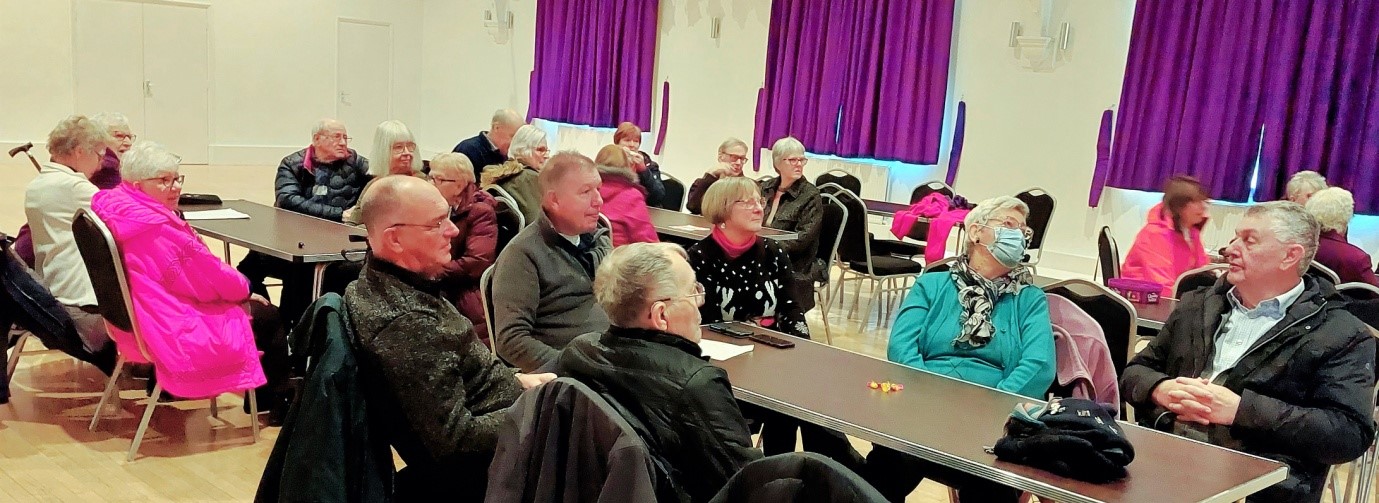
We had a very interesting session in November starting with a presentation from Terry Hill who told us about the Artemis I rocket which is off to the Moon. However, it will not land on the Moon and is currently in orbit nearby before returning to Earth after 26 days.

He then explained how this could be part of the plan to put humans on Mars. This led to speculation about how physical characteristics of humans living in reduced gravity might evolve in the future.

Bob McEwen followed with a very interesting look at how the eyes (and some other senses) of different animals and birds have evolved and adapted to suit their environment and lifestyles.

And finally, Christine Vincent showed a short video with soundtrack and fantastic images from space telescopes.

December Christmas Meeting – Friday, December 16th 2022, John Godber Centre, 10am to 11.45am
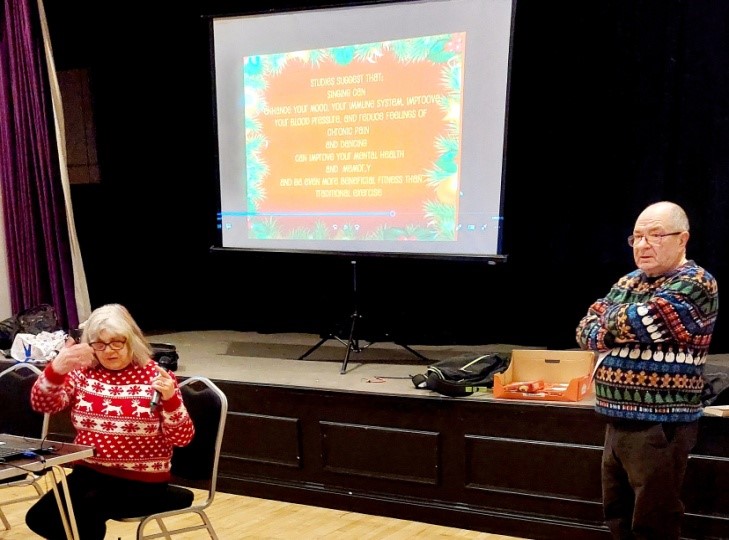
Christmas Science-based Quiz with quiz maestros David and Christine Vincent. A fun quiz with a team prize and festive light refreshments in the break.

We will spend the first 15 minutes for Bob to demonstrate a colour blind test to detect Red-green colour blindness which makes it difficult for someone to differentiate between red, green, and yellow.

David Rose

Science

Our meeting is on Friday 18th November, 2022 10am to 11.45am in the Portland Room at the John Godber Centre.

Our theme and presentations are ‘Animal’ based:
Bob McEwen: An aspect of animal design
Terry Hill: Human evolution, the future of mankind and how it may develop.
David Rose: To consider some reasons for animal extinction.


An image of an extinct Sabre Tooth Tiger

David Rose

Science

Our theme for the September meeting was based around energy. The question being could we in the United Kingdom (where we are well endowed with wind, wave, and tidal resources) live on our own renewable forms of energy? It is generally agreed that there is a need to move away from unsustainable fossil fuels by generating more power from renewable sources. One currently untapped potential resource is harnessing the power of the tides at the Severn estuary by building the Severn Barrage.

Member, John Tedstone, presented the history and background of numerous proposed projects over the years, initially to provide a safe harbour and more recently to generate electricity.

The group was split into four teams, two to discuss reasons why the barrage should be built and two to give reasons to oppose it. This led to some lively discussion followed by feedback presented by a spokesperson from each team.

At the end a vote was taken which was unanimously in favour of building the barrage providing that the environmental impact especially on migratory and overwintering birds was addressed.

Next Meeting: Friday 21st October 10.00 am to 11.45 am, John Godber Centre, Portland Room.

As we cover many aspects of science this time Bob McKewen will be telling us about ‘Animal Design’ and from me ‘Animals saved from the brink of extinction’.

David Rose

Science

Following our summer sunshine break we meet again on Friday 16th September at 10.00 am to 11.45 am at the usual venue the Portland Room at John Godber Centre.

John Tedstone has been busy putting together a presentation about:

This will be followed by a group activity to consider a Developer’s and an opposing NIMBY’s perspective based around the history of the proposed River Severn Barrage. The opposing groups will consider reasons why:

We should build the Barrage or stop the Barrage being built?

If we have time we will finish by looking at some of the most recent eye-catching images in science from around the world.

David Rose

Science

Friday, July 15th, 2022 was the date of the Science Group’s annual visit to a place of scientific interest. Previously we have ventured to Jodrell Bank, Woolsthorpe Hall (the birthplace of Sir Isaac Newton) and guided tours of Papplewick Pumping Station and Bestwood Winding House.

This year we paid a visit to The George Green Windmill and Science Centre in Sneinton. George Green was 14 years old when his father built the windmill and for much of the rest of his life George worked in the windmill. But George Green was also a brilliant mathematician and physicist who from the age of 40 spent 6 years at Caius College at Cambridge University.

We were split into two groups for a guided tour of the Windmill; the group not on the tour were able to spend time in the science centre and the community garden.


Lesson 1 for some potential apprentice Millers

Joan explains to Jean the nuances of Green’s simplified theory of electromagnetism

Sue demonstrating that the human body is a battery

Our guide Sam Boote, who is a member of Keyworth u3a, was very knowledgeable and this is what he wrote to me a day after the visit:
Hello David
Thanks for your comments, and it was a pleasure to meet your members and show them round the mill. Your 2 groups were the most attentive and engaged that I have yet encountered.

It was a good day out and recommended for a family visit especially if you have the pleasure of grandchildren over the school summer break. Following the visit many of us enjoyed a prearranged meal on the way back at The Arrow in Arnold.

Next Meeting: August is a summer break. September 16th we are back at the John Godber Centre at 10.00 am

David Rose
.