Not So Grumpy Old Men

Visit Mansfield Fire Brigade Museum

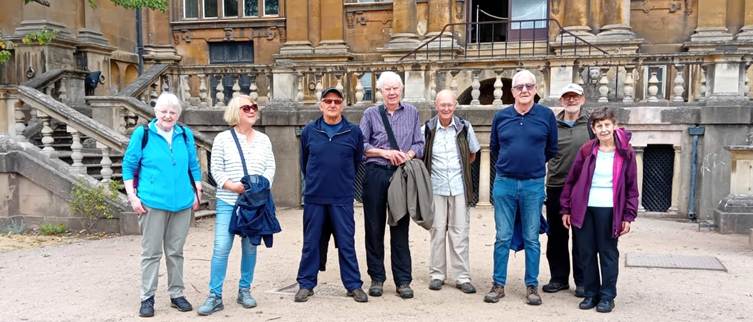
Nineteen members of the NSGOM group recently attached blues and twos to their cars and went up to Mansfield to learn about the history of the Nottinghamshire Fire Service. Located at the front of the former Notts Fire Service training school in Mansfield, the site also houses the present Mansfield Fire Station.  The Museum is run by a Trust and relies heavily on volunteers.

The aim of the Trust is to collect and preserve fire service items from as far back as the Great Fire of London but also showing many local items, for example from Thoresby and Welbeck Estates.

Assembling together inside the museum we were given a very informative history of the fire service, which included being shown, a leather bucket and “squirter” used in the 17th century. We then went on a comprehensive tour of the museum seeing fire fighting equipment, uniforms, helmets and various fire engines themselves,

We are lucky to have one of the few such museums in the country on the doorstep and we enjoyed a couple of hours learning so much about the history of the fire service. Huge thanks go to group member Dave Robbins for planning the day and also to volunteers, Richard and Paul, who led the visit and were a fountain of knowledge.

The visit was completed with a meal and drink at the Rushley restaurant in Mansfield, before returning back to Hucknall.

Barrie Saunders

Garden Group

Last month members enjoyed a trip to the allotments at St Ann’s in Nottingham. It was a very interesting visit, full of history. There are 75 acres of allotments, which includes 32 miles of hedges that need trimming and cutting. Sounds like a lot of work! There is one allotment that has been kept as it was when they were set up, with a small building where the families used to spend weekends as they tended their rented plots. Apparently, some families even lived there completely when they were homeless. 

The site has some areas now where horticulture students can study and learn all about plants and their growing needs. There’s a classroom, greenhouse and beds to trial different plants and shrubs. Although it was forecast to be a very wet day the rain held off and we enjoyed a dry wander around the site.

The next meeting is a talk about Ramblers, Scramblers and Climbers at the JGC, all are welcome.

The August meeting is a trip to Queen’s Park in Loughborough followed by a visit to Gates Garden Centre.

Anne

Vegetarian Cookery

A smaller group than usual attended June’s meeting, probably due to the hot weather, but those who did attend enjoyed the usual three recipes, and as ever there were no leftovers!

Thank you to those who helped in the kitchen, organising the room and serving out the plates of food, we cannot do it without you!

There will be no meeting in July, but as August has 5 Mondays, we can fit one in on Monday 24th August.

This group is currently full, but if anyone else is interested please contact me with your name and I will put you on the waiting list.

Anne

Medium Walks

Our June walk took us to the east of Nottinghamshire, and the rolling countryside between the villages of Car Colson and Kneeton. Starting from the green at Car Colston, we headed west over the A46 (using the bridge!) and stopped to look at an abandoned farm, deciding that the roof tiles at least looked good for re-use.

We paused at the quiet hamlet of Kneeton, for our coffee stop outside the church. From here, it is a short walk steeply downhill to the River Trent, but we carried on, heading back over the fields to our start point. At our picnic stop, a few of our walkers were attracted by an abandoned hut (ideal for shepherds or a B&B) with convenient old garden chairs.

Back at our start point, we had drinks in the Royal Oak, a pub for around 200 years with a vaulted brick ceiling.

Thanks to John Beharall and Steve Lawrence for planning this walk – our July walk will be at Foremark Reservoir, near Melbourne.

John Tedstone

History Group

This month we were on a visit to Matlock Bath and Sir Richard Arkwright’s Masson Mill which is the water powered cotton spinning mill on the river Derwent.

The mill was built in 1783 and is part of the World Heritage Site. It was originally powered by a water wheel but turbines were installed in 1928 until hydroelectric generators in 1995.

Masson Mill is now a museum. Members were split into group to be taken round the museum on guided tours. The guides were amazing, full of knowledge about Arkwright, machinery, mill workers and helped us understand the building.

One of our best visits, I thought.

Maureen Newton